
There is a golden rule in the world of craft coffee that almost every barista swears by: when it comes to cold brew, coarse grind is king. We are told that using anything finer than sea salt will inevitably result in a murky, bitter sludge, ruining those delicate, low-acid notes we crave on a warm afternoon. But what happens when you find yourself with a bag of pre-ground supermarket coffee, or your grinder accidentally churned out a fine espresso powder? Do you abandon your plans, or do you dare to defy convention?
The truth is, you don’t need a fancy burr grinder set to the coarsest setting to achieve cold brew nirvana. While fine grounds are notorious for extracting flavor rapidly—often risking that dreaded astringency—they also hold the potential to create an incredibly robust and potent concentrate if handled with care. By significantly adjusting your steeping time and mastering a multi-step filtration process, you can turn “forbidden” grounds into a silky, full-bodied cup that rivals any coffee shop creation.
In this guide, we are going to break the rules of traditional brewing. We will walk you through the delicate art of using fine grounds, showing you exactly how to navigate the risks of over-extraction to produce a brew that is surprisingly smooth, rich, and ready to energize your day.
Conventional wisdom dictates that coarse grounds are king when it comes to cold brew. The standard argument is simple: fine grounds extract too quickly, leading to a harsh, bitter cup, and they create a muddy “sludge” that clogs filters and ruins the texture.
However, breaking this rule can be surprisingly rewarding if approached correctly. Here is why you might reach for a finer grind:
- Speed and Efficiency: Fine grounds promote rapid extraction. Instead of waiting 18–24 hours, you can achieve a potent concentrate in as little as 8 to 10 hours.
- Convenience: Not everyone owns a high-end burr grinder. Most pre-ground coffee sold in stores is medium-fine. Using what you have on hand is often better than not brewing at all.
- Intense Flavor Profile: A finer grind exposes more surface area, potentially unlocking bright, floral, or citrus notes that a coarse grind might miss.
If you do choose fine grounds, simply shorten your steep time and use a high-quality paper or cloth filter to catch the sediment. The result can be a uniquely bold brew that defies the “rules” of the trade.
Mastering the Fundamentals: Key Adaptations for Fine Ground Cold Brew
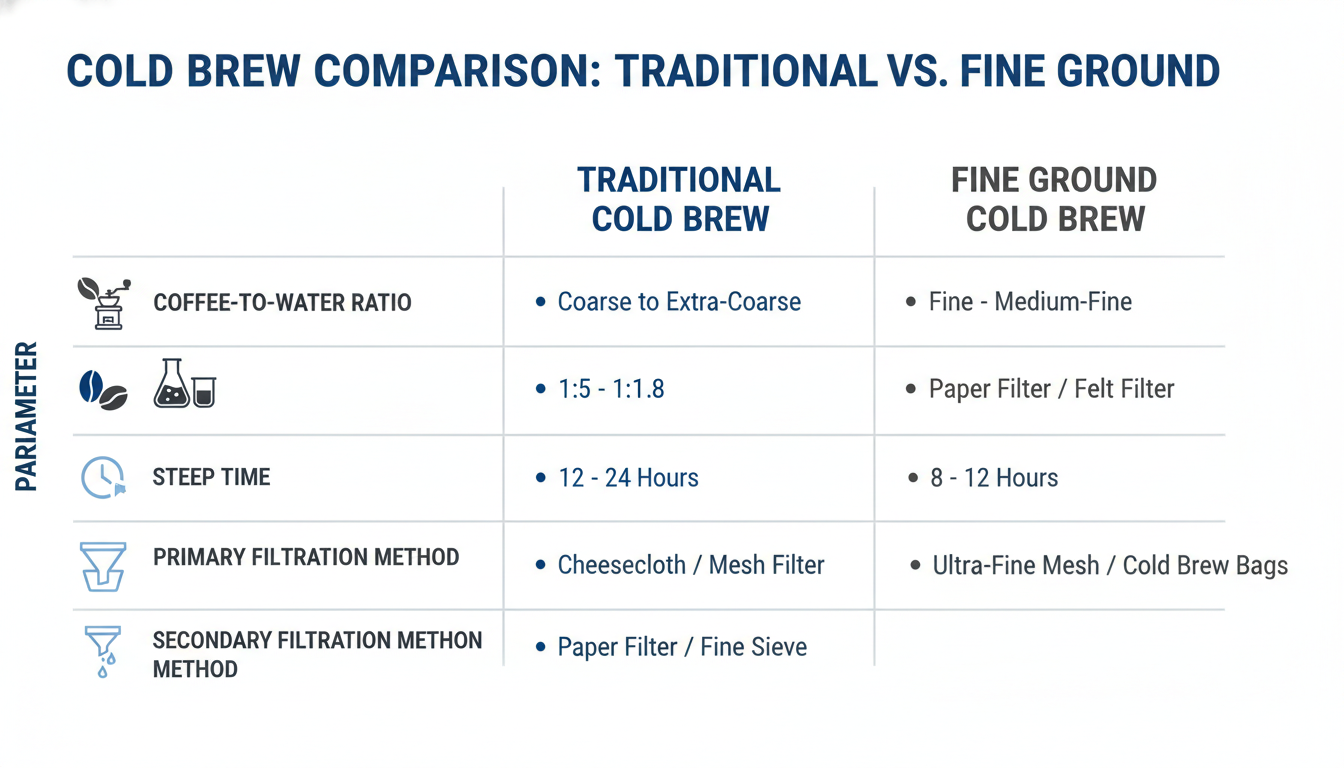
Brewing with fine grounds fundamentally changes the extraction physics of cold brew. Because fine grounds expose significantly more surface area than coarse grounds, extraction happens much faster. To avoid a bitter, muddy, or over-extracted cup, you must adapt your variables.
- Modified Ratios: Fine grind efficiency allows you to stretch your supply. While standard cold brew often uses a 1:4 (coffee to water) ratio, fine grounds can be brewed at a 1:8 or 1:10 ratio to achieve a similar strength concentrate. If you stick to a tighter ratio, be prepared to dilute more aggressively.
- Significantly Shorter Steep Times: This is the most critical adjustment. Forget the 12–24 hour standard. Fine ground cold brew typically hits peak extraction in just 4 to 8 hours. Begin tasting at the 4-hour mark; leaving it too long will rapidly introduce woody and astringent notes.
-
Specialized Filtration: Fine grounds will clog standard paper filters instantly. You must use a two-stage filtration process:
- First, pour through a fine-mesh metal sieve or cheesecloth to remove the bulk of the sludge.
- Second, pass the liquid through a paper or cloth filter for clarity.
Finally, pay attention to water quality and agitation. Fine grounds are prone to dry clumping, so ensure you stir thoroughly at the start to saturate every particle. However, avoid agitating during the steep, as this can accelerate extraction unpredictably. Use filtered water to ensure the increased extraction power doesn’t pull unwanted mineral tastes into your final cup.
Analysis: Mastering the Fundamentals: Key Adaptations for Fine Ground Cold Brew
Your Arsenal: Essential Tools and Ingredients
Brewing with fine grounds unlocks a depth of flavor that coarse grinds often miss, but it requires a tactical approach to avoid a muddy texture. To achieve a clean, potent cup, your toolkit matters just as much as your recipe.
- The Coffee: Freshness is non-negotiable. Aim for freshly roasted beans—medium to dark roasts generally yield that classic, chocolatey cold brew profile. If you are grinding at home, aim for a consistent fine grind (think table salt). This maximizes surface area for a rapid, robust extraction.
- The Vessel: You don’t need expensive equipment. A large Mason jar or glass pitcher works perfectly. However, a French Press is particularly useful for fine grounds, allowing for full immersion and an easy initial plunge.
- Filtration Aids: This is the most critical step for fine grounds. To banish grit, you need a multi-stage defense:
- Nut Milk Bags: These offer tighter filtration than metal mesh, trapping silt while allowing oils to pass through.
- Fine Mesh Strainers: perfect for the first pass to remove the bulk of the grounds.
- Paper Filters: The ultimate polisher. Running your concentrate through a standard paper filter captures microscopic sediment and sludge, ensuring a crisp, professional-quality mouthfeel.
Step-by-Step Perfection: Crafting Your Fine Ground Cold Brew
Ready to brew? Creating a clean cup with fine grounds requires precision, but the intense flavor payoff is worth the effort. Follow this protocol to transform your fine grind into liquid gold.
1. The Golden Ratio & Grind
Start with a 1:8 ratio by weight (e.g., 100g coffee to 800g water). Ensure your beans are ground to a fine consistency, resembling table salt. This maximizes surface area for a robust extraction.
2. Combine & Saturate
Place the grounds in your vessel and pour cool, filtered water over them. Stir gently but thoroughly. Because fine grounds clump easily, you must ensure there are no dry pockets hiding at the bottom.
3. The Steep
Cover and let the mixture steep at room temperature for 12 to 18 hours. Fine grounds extract faster than coarse ones, so taste-test at the 12-hour mark to prevent bitterness.
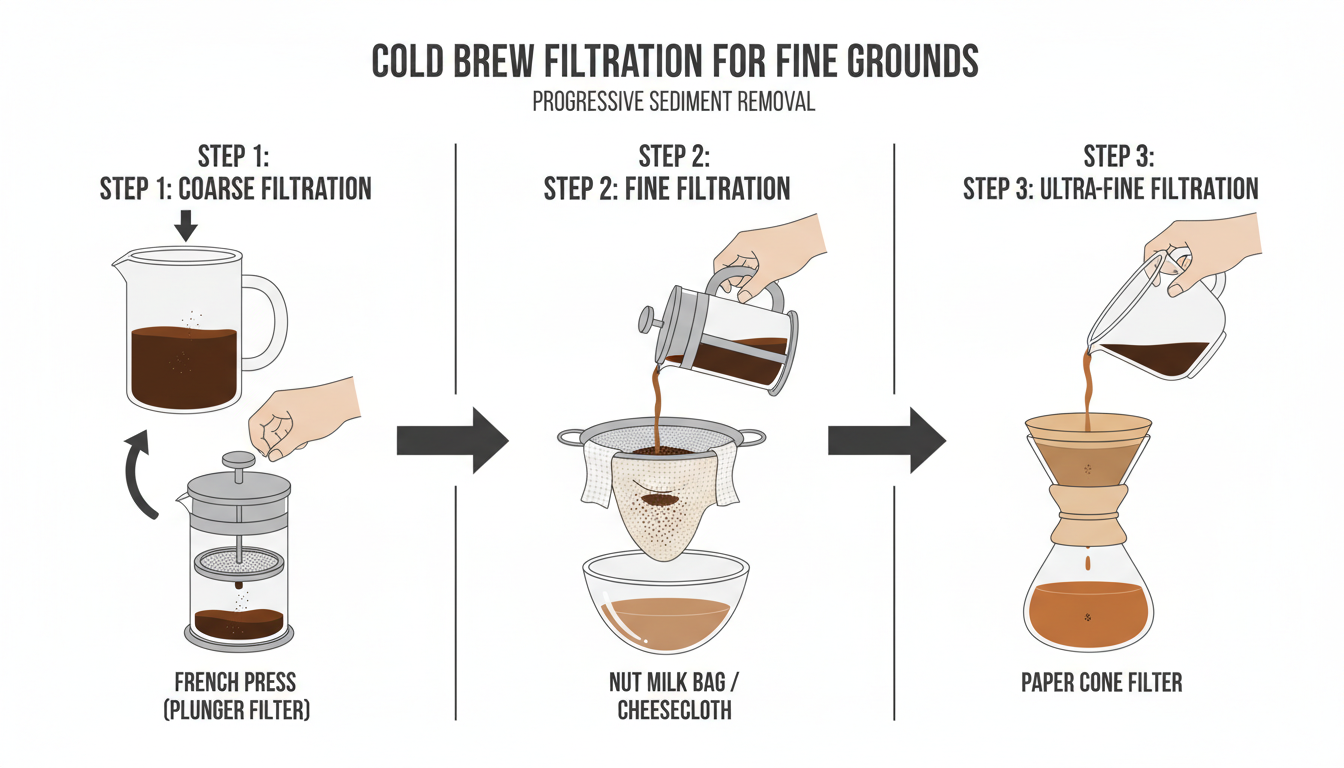
4. The Critical Multi-Stage Filtration
Fine grounds create sediment that ruins texture. To achieve a silky mouthfeel, you cannot skip steps here:
- Stage 1: Pour the brew through a fine-mesh metal sieve to remove the bulk of the grounds.
- Stage 2: Pass the liquid through a high-quality paper filter or dense cloth. This slow drip captures the microscopic silt (sludge), leaving you with a clean, potent concentrate.
Analysis: Step-by-Step Perfection: Crafting Your Fine Ground Cold Brew
Troubleshooting & Tweak Tips: Common Pitfalls and Solutions
Using fine grounds for cold brew is a high-risk, high-reward game. While it offers a potent extraction in record time, it requires precise handling to avoid a cup that is sludge-heavy or harsh. If your batch isn’t tasting quite right, check these common adjustments:
- The Brew is Too Bitter: Fine grounds surrender their compounds rapidly. If your coffee tastes medicinal, harsh, or astringent, you have likely over-extracted. Reduce your steeping time significantly; unlike coarse grind recipes that need 18+ hours, fine grind cold brew is often ready in just 8 to 12 hours.
- Cloudy or “Muddy” Texture: Micro-particles (fines) love to bypass standard metal mesh filters, leaving a silty residue at the bottom of your glass. The fix is secondary filtration. After the initial strain, pour your concentrate through a standard paper coffee filter or a dense cheesecloth to “polish” the liquid and achieve a clean mouthfeel.
- Filter Clogging: This is the most frustrating hurdle. If your flow stops, do not squeeze the bag or force the liquid through, as this extracts bitter tannins. Instead, gently lift the filter to redistribute the bed of grounds. Next time, let the brewing vessel sit undisturbed for an hour before filtering to allow the sediment to settle at the bottom.
Beyond the Basics: Elevating Your Fine Ground Cold Brew Experience
Once you have mastered the ratio and timing, it is time to turn your cold brew ritual into a science. Because fine grounds offer more surface area, they are incredibly responsive to subtle changes in your brewing environment. Here is how to unlock complex flavor profiles and truly make the brew your own:
- Try a “Hot Bloom”: Just like a pour-over, pour a small amount of hot water (around 200°F) over your fine grounds and let them sit for 30 seconds before adding your cold water. This degasses the coffee, unlocking bright, floral notes that cold water alone might miss.
- Experiment with Temperature: While the fridge is standard, brewing at room temperature can speed up extraction significantly. With fine grounds, a 4-hour counter-top brew might yield a bolder cup than 12 hours in the cold.
- Post-Filtration Infusions: Avoid adding spices during the steep, as fine grounds can pack tightly around them, leading to uneven extraction. Instead, infuse your finished concentrate with orange peel, vanilla bean, or cinnamon sticks for a clean, customized flavor.
- Optimize Storage: Oxygen is the enemy of flavor. Store your concentrate in an airtight container with minimal headspace to keep it tasting fresh for up to two weeks.
Don’t be afraid to break the rules—personalizing these variables is the key to finding your perfect cup.
Conclusion: The Fine Art of Fine Grounds
We’ve officially debunked the myth that cold brew demands coarse coffee beans. As we’ve discovered, making delicious cold brew with fine grounds isn’t just a “make-do” solution—it’s a distinct technique that can yield a bold, vibrant, and surprisingly complex concentrate.
To master this fine art and ensure your cup is smooth rather than muddy, remember the golden rules we’ve covered:
- Watch the Clock: Fine grounds extract significantly faster. Reduce your steeping time (often to 12 hours or less) to avoid over-extraction and bitterness.
- Filter Aggressively: Combat the silt by using a double-filtration method or a high-quality paper filter to achieve that crystal-clean mouthfeel.
- Trust Your Palate: Adjust your water-to-coffee ratio until you find the strength that suits you best.
Ultimately, coffee is meant to be enjoyed, not restricted by rigid rules. Don’t be afraid to experiment with the pre-ground coffee you already have in your pantry. With a little adjustments and a spirit of experimentation, you are well on your way to a smoother, richer, and satisfying caffeine fix right at home.
Happy brewing!
FAQ: Your Fine Ground Cold Brew Questions Answered
Making cold brew with fine grounds is a little different from the traditional coarse-grind method. Here are answers to the most common questions to help you get a smooth cup every time.
-
Can I use fine grounds for cold brew?
Yes, absolutely. While coarse grounds are standard, fine grounds work if you adjust your method. Expect a stronger, full-bodied extraction but be prepared for a slightly more labor-intensive filtering process to remove the silt. -
Does fine grind cold brew taste different?
It can. Because fine grounds extract faster, the flavor profile is often more intense and can highlight floral or citrus notes. However, it risks becoming bitter or “muddy” if over-steeped, unlike the naturally sweeter, forgiving profile of coarse grinds. -
How long should I steep fine grounds?
Reduce your steep time significantly. Unlike the 12–24 hours recommended for coarse coffee, fine grounds should typically steep for only 8 to 12 hours. Taste-test at the 8-hour mark to ensure it hasn’t turned bitter. -
How do I avoid “sludge” in my cup?
Fine grounds can clog standard metal filters. For a clean cup, use a two-step filtration process: first strain through a fine-mesh sieve, then pour the liquid through a paper filter or cheesecloth. An AeroPress is also excellent for filtering fine-grind batches quickly. -
How should I store it?
Store your brew in an airtight container in the fridge. Because fine sediment can settle at the bottom and continue extracting (making the coffee bitter over time), it is best to decant the brew off any settled sludge before storing. It stays fresh for about 7–10 days.
Conclusion: Embracing the Speed of Fine Grounds
Mastering cold brew with fine ground coffee is about balancing patience with precision. While traditional methods dictate coarse grounds and day-long steeps, using fine grounds allows you to unlock a potent, aromatic concentrate in a fraction of the time.
By adjusting your brew time to prevent over-extraction and employing a rigorous double-filtration method to manage sediment, you can achieve a cup that rivals the smoothness of any coffee shop brew. Don’t be afraid to break the “coarse-only” rule; with the right technique, fine grounds offer a rich, full-bodied shortcut to your morning caffeine fix.
Frequently Asked Questions
1. Why does my fine-ground cold brew taste bitter?
Bitterness usually indicates over-extraction. Because fine grounds have a much larger surface area than coarse grounds, they release flavor compounds (and tannins) much faster. If your brew tastes bitter, try reducing your steeping time—aim for 4 to 8 hours instead of the standard 12 to 24 hours.
2. How do I stop the coffee from being “muddy” or silty?
Sediment is the biggest challenge with fine grounds. A standard French press or metal mesh sieve won’t catch the tiny particles. To get a clean cup, you must perform a secondary filtration step using a paper filter (like a standard drip coffee filter) or a fine cheesecloth after the initial strain.
3. Can I use pre-ground espresso coffee for cold brew?
Yes! Pre-ground espresso is essentially fine-ground coffee. It works perfectly for this method. Just remember that espresso blends are often roasted darker, so the resulting cold brew will have bold, chocolatey notes and will steep very quickly.
4. Does fine ground coffee make stronger cold brew?
Generally, yes. Fine grounds allow for a more efficient extraction of caffeine and oils due to the increased surface area. The result is often a “heavier” and more potent concentrate compared to coarse grounds used for the same amount of time. You may find you need to dilute it more with water or milk than usual.