
Have you ever reached a major milestone—a promotion, a new house, or a significant birthday—only to feel a quiet, nagging sense of “is this it?” In our hyper-connected, fast-paced world, it is all too easy to slip into autopilot, chasing societal markers of success while our inner compass gathers dust. We often mistake busyness for importance and status for significance, leaving us with a full schedule but an empty spirit. But here is the liberating truth: a meaningful life is not a distant treasure to be found at the end of a rainbow; it is a masterpiece to be created, brushstroke by brushstroke, right where you stand today.
True fulfillment does not require you to sell your possessions and retreat to a mountaintop; it simply requires a shift in perspective and the courage to align your daily actions with your deepest values. This guide is not a collection of abstract platitudes, but a practical toolkit for the soul. Over the following chapters, we will move beyond the “why” and dive straight into the “how,” offering actionable strategies to uncover your unique purpose and infuse your everyday existence with profound intention. It is time to turn off the autopilot and start living deeply. Let’s begin.
Have you ever achieved a major milestone—a promotion, a new car, or a dream vacation—only to find the satisfaction fading far faster than you expected? You are not alone. While the modern world obsessively chases fleeting moments of happiness, there is a deeper, universal hunger within us all: the desire for a life that actually matters.
A meaningful life is distinct from mere pleasure. While happiness is often transient and self-focused, meaning is enduring and expansive. It is not just about feeling good; it is about being good to the world around you. True significance encompasses four pillars:
- Purpose: Knowing your “why” and moving through the world with clear intention.
- Contribution: Using your unique strengths to add value to others.
- Connection: Cultivating deep, vulnerable relationships rather than superficial transactions.
- Transcendence: Connecting to something bigger than your immediate self.
We aren’t just looking to pass the time; we are looking to define it. This comprehensive guide will move beyond abstract philosophy to provide you with actionable strategies and insights. By applying these principles, you can shift your focus from chasing the next dopamine hit to cultivating a life rich with meaning and profound satisfaction.
Defining a Meaningful Life: More Than Just Happiness
While happiness is often defined by a fleeting state of comfort or joy—the “hedonic” pleasure of the moment—a meaningful life is constructed on a foundation of depth and resilience. Psychologists distinguish happiness as getting what you want, whereas meaning is derived from doing things for others and expressing the self. While the former is a transient emotion, the latter is a cognitive and emotional assessment of whether one’s life has coherence and value.
To cultivate this deeper satisfaction, experts generally recognize four pillars that uphold a meaningful existence:
- Purpose: A consistent sense of aim and direction that guides your life goals and daily activities.
- Belonging: Cultivating strong relationships and communities where you are valued for who you are, not just what you achieve.
- Transcendence: Connecting to something significantly bigger than oneself, such as nature, faith, or a humanitarian cause.
- Storytelling: The ability to weave disparate life experiences—including trauma and failure—into a coherent narrative that defines your identity.
Ultimately, pursuing meaning leads to more enduring satisfaction than chasing happiness. Happiness often evaporates during a crisis, but meaning provides the psychological anchor necessary to navigate suffering, offering a sense of stability even when “feeling good” isn’t an option.
The Path of Self-Discovery: Unearthing Your Core Values and Strengths
True personal growth begins with self-awareness. Before you can build the life you want, you must understand the foundation you are standing on. This process isn’t about creating a new persona; it is about excavating who you truly are.
To identify your Core Values, look for clues in your emotional history:
- Reflect on Peak Experiences: Recall moments of deep satisfaction. What was happening, and why did it resonate so profoundly?
- Analyze Frustrations: Profound anger or annoyance often signals that a specific value has been violated.
- Review Difficult Decisions: The choices you make under pressure often reveal your non-negotiables.
Simultaneously, you must recognize your Personal Strengths. While formal tools like the VIA Character Strengths survey provide structured insights, you can also simply follow your energy. Notice which activities leave you feeling invigorated rather than drained, and identify areas where you excel with natural ease.
Unearthing these gems requires quiet. Commit to daily journaling or mindfulness practice. By slowing down and listening to your inner narrative, you transform vague feelings into concrete guiding principles for your future.
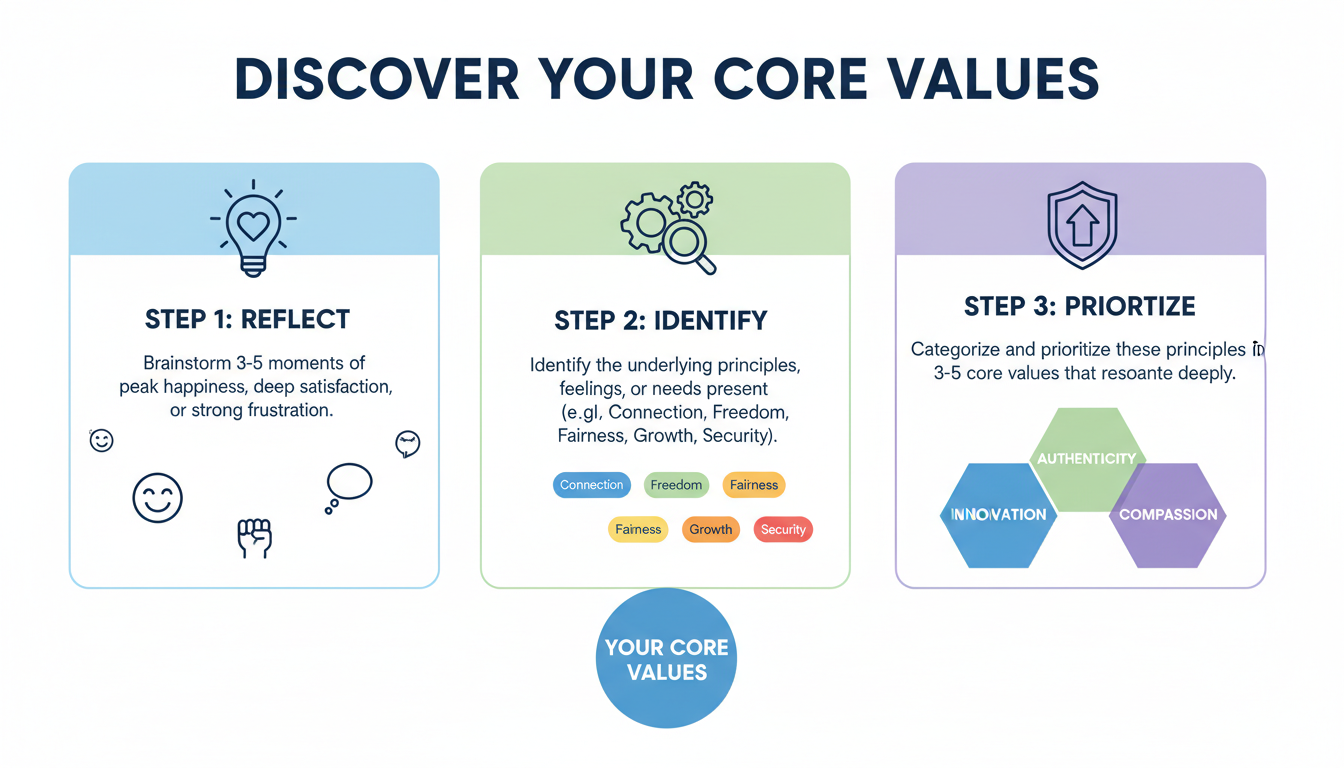
Analysis: The Path of Self-Discovery: Unearthing Your Core Values and Strengths
Finding true fulfillment requires looking past the 9-to-5 grind to uncover your fundamental “Why”—a life calling that fuels your spirit. Purpose isn’t just about a career; it is the compass that guides your decisions and defines your impact. A powerful tool for this discovery is the Japanese framework of Ikigai (a reason for being), which encourages you to seek the sweet spot where four distinct elements converge:
- What you love (Your Passion)
- What you are good at (Your Profession)
- What the world needs (Your Mission)
- What you can be paid for (Your Vocation)
Aligning these circles creates a sense of harmony and sustainability in your life. However, insight alone is not enough; you must bridge the gap between abstract purpose and daily reality. To do this, translate your “Why” into intentional goals grounded in your core values. Utilize the SMART framework—ensuring objectives are Specific, Measurable, Achievable, Relevant, and Time-bound—to turn your vision into a concrete roadmap. By deliberately aligning your short-term actions with your long-term purpose, you ensure that every step forward is not just progress, but a meaningful journey toward the life you were meant to lead.
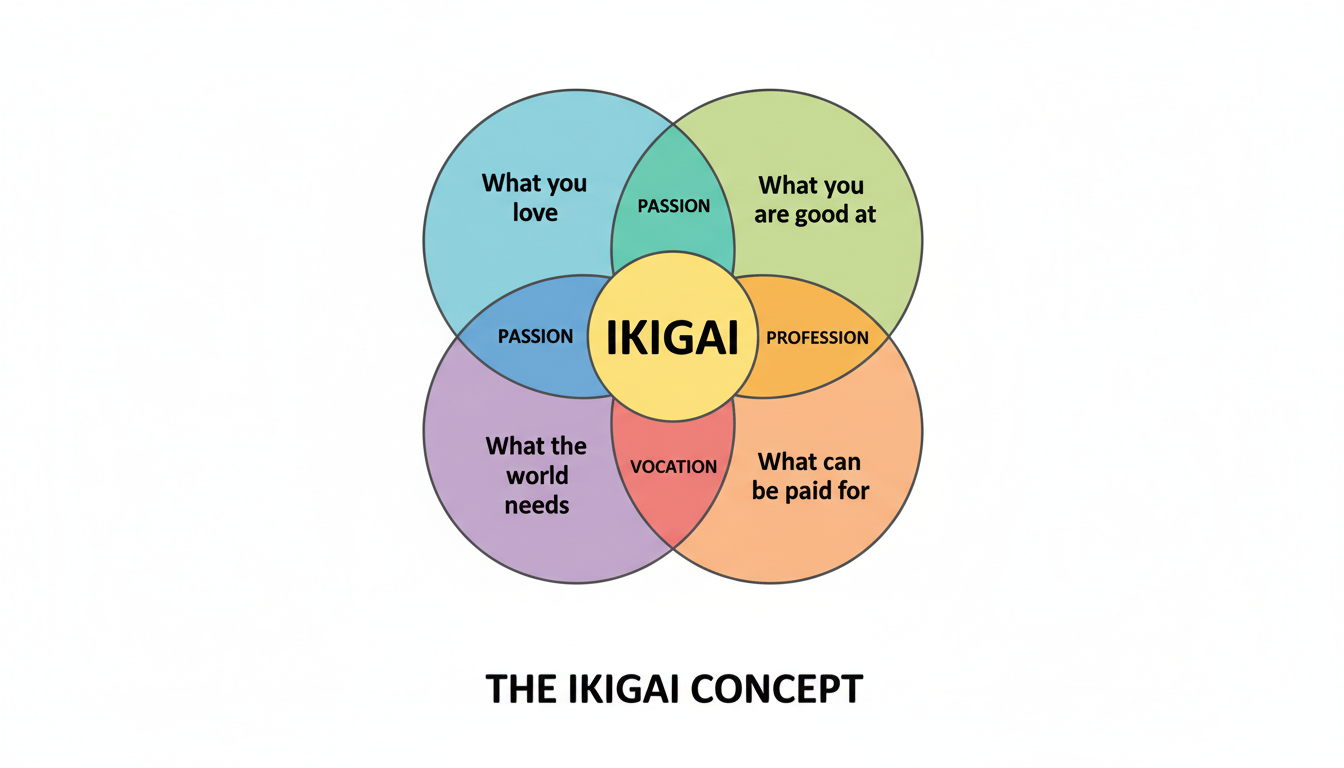
Analysis: Cultivating Purpose: Identifying Your “Why” and Setting Intentional Goals
Fostering Connection: Building Strong Relationships and Community
At our core, humans are social creatures wired for connection. The drive to belong is not merely a desire; it is a fundamental necessity for a fulfilling and meaningful life. True wealth is often found not in material accumulation, but in the depth and authenticity of our relationships with partners, family, friends, and mentors.
Moving beyond surface-level interactions requires intention and emotional investment. To nurture these bonds, consider these practical steps:
- Practice Active Listening: Focus fully on the speaker to understand their perspective, rather than listening simply to respond.
- Embrace Vulnerability: Authenticity breeds trust. letting your guard down invites others to do the same.
- Set Healthy Boundaries: respecting your own limits and those of others is essential for sustainable relationships.
- Show Genuine Appreciation: regularly express gratitude to make your loved ones feel seen and valued.
Finally, extend your reach beyond your immediate circle. Contributing to a larger community or shared cause anchors you to something greater than yourself. By lifting others up, you create a resilient support network that enriches the lives of everyone involved.
Life is rarely a smooth trajectory; challenges and setbacks are inevitable. However, these struggles often serve as crucibles for profound meaning rather than mere roadblocks. Beyond the ability to simply recover, there lies the transformative concept of post-traumatic growth—the experience of finding positive psychological change in the wake of adversity. It is the realization that while we cannot control every event, we can control how we integrate these experiences to become wiser and more empathetic.
To navigate this journey from struggle to strength, consider these strategies:
- Develop a Growth Mindset: Shift your perspective to view obstacles not as insurmountable walls, but as distinct opportunities for learning. Ask not just how to survive the problem, but how the problem might help you evolve.
- Practice Self-Compassion: Resilience requires energy, and self-criticism drains it. Treat yourself with the same kindness and patience you would offer a friend, acknowledging that healing is often non-linear.
- Build Holistic Resilience: Stay grounded through mindfulness to manage emotional reactivity. Furthermore, actively seek social support; connection acts as a buffer against stress, reminding you that you do not have to carry the burden alone.
By reframing obstacles and adapting to change rather than resisting it, you transform your deepest struggles into your greatest sources of resilience.
Finding purpose doesn’t require waiting for a life-changing epiphany; it requires recognizing that meaning is woven into the fabric of daily existence. Often, we overlook the profound in search of the grand, yet a truly rich life is built through small, intentional choices made every day. By shifting your mindset, you can transform the mundane into the meaningful immediately.
- Practice Mindful Presence: Turn routine chores—like washing dishes or walking to the bus—into grounding exercises. Focus entirely on the sensory experience to anchor yourself in the now rather than rushing to the next moment.
- Cultivate Consistent Gratitude: Rewire your brain to scan for purpose by writing down three specific things you are thankful for every evening, focusing on “why” they matter.
- Engage in Micro-Acts of Kindness: Meaning flourishes in connection. Send a supportive text, hold the door, or offer a genuine compliment to lift someone else’s day.
- Create Value-Aligned Rituals: If you value creativity or peace, structure your morning to include ten minutes of writing or silence before the world rushes in.
- Prioritize Connection: Ruthlessly audit your schedule to ensure your time reflects your priorities, carving out uninterrupted space for the relationships that matter most.
Ultimately, a meaningful life isn’t a destination you reach, but a habit of traveling intentionally through your ordinary moments.
Conclusion: Your Ongoing Journey of Purpose and Fulfillment
Living a truly meaningful life is not a static achievement, but a dynamic tapestry woven from your daily choices. Throughout this guide, we’ve explored the essential pillars of fulfillment: defining your core values, leveraging your unique strengths, and fostering deep connections with the world around you.
Remember, purpose is not a final destination; it is an ongoing journey of discovery and contribution. You do not need to overhaul your entire existence overnight. Instead, focus on sustainable, incremental shifts:
- Start Small: Dedicate just ten minutes a day to a passion project or mindfulness practice.
- Experiment Freely: Step outside your comfort zone to uncover what truly lights you up.
- Practice Self-Compassion: Be patient with yourself as you navigate setbacks and growth.
Your life is your canvas. You possess the agency to paint it with intention and joy. Don’t wait for permission or the “perfect” moment. Embrace the uncertainty, trust the process, and actively design a life that resonates with who you are and who you aspire to be. Your journey of purpose begins with the very next step you take.
FAQ: Common Questions About Living a Meaningful Life
Navigating the path to a purposeful existence often brings up doubts and uncertainty. Here are concise answers to common misconceptions to help clarify your journey:
-
Is a meaningful life always happy?
Not necessarily. Happiness is a fleeting emotion, while meaning is a sustainable sense of fulfillment. A meaningful life often involves responsibility, sacrifice, or overcoming challenges, which ultimately leads to a deeper satisfaction than constant pleasure. -
Can I find meaning in a mundane job or daily routine?
Absolutely. Meaning isn’t always about grand gestures; it is often found in how you approach your tasks. You can cultivate purpose by being helpful to colleagues, taking pride in your effort, or seeing how your work supports your loved ones. -
What if I don’t know my purpose yet?
That is completely okay. Purpose is rarely a single “lightbulb moment.” It is built, not found. Start by following your curiosity and acting on your values today, rather than waiting for a perfect revelation. -
How long does it take to find meaning?
There is no deadline. Meaning is a lifelong practice, not a finish line. It evolves as you grow, so focus on creating meaning in the present moment. -
Is meaning the same as success?
No. Success is often measured by external metrics like wealth or status. Meaning is internal. You can be “successful” without feeling fulfilled, but living meaningfully creates a personal definition of success that lasts.
Conclusion: The Journey to a Life That Matters
Living a truly meaningful life is rarely about grand gestures or achieving widespread fame. As we have explored in this guide, it is about alignment—ensuring your daily actions mirror your deepest values. Whether you are finding purpose through your career, your relationships, or your personal growth, the secret lies in consistency and intention.
Remember that meaning is not a final destination you arrive at; it is an active practice. It is found in the small moments: the difficult conversations you handle with grace, the skills you patiently master, and the kindness you extend to others.
Key Takeaways:
- Define Your Values: You cannot live meaningfully if you don’t know what matters to you.
- Embrace Responsibility: Ownership of your life is the foundation of fulfillment.
- Connect Deeply: We are wired for connection; prioritize relationships over transactions.
- Contribute: Meaning is often found where your talents meet the world’s needs.
Don’t wait for a “lightbulb moment.” Start today. Pick one small area of your life to improve, and take the first step. Your meaningful life is being built right now, one choice at a time.
Frequently Asked Questions (FAQ)
1. What if I have no idea what my “purpose” is?
This is a common fear, but purpose is rarely something you “find” like a lost set of keys. It is something you build. Instead of waiting for a singular calling, follow your curiosity. Try new hobbies, volunteer, or say “yes” to projects that slightly scare you. Action produces clarity. As you engage with the world, your purpose will begin to reveal itself through what you find fulfilling.
2. Is there a difference between happiness and meaning?
Yes, and the distinction is important. Happiness is often a fleeting emotional state characterized by comfort and feeling good in the moment. Meaning is a deeper sense of significance and belonging. Interestingly, living a meaningful life can sometimes be stressful or challenging (like raising a child or starting a business), but it provides a sense of fulfillment that pure happiness cannot.
3. Can I live a meaningful life if I don’t love my job?
Absolutely. While work is a common source of purpose, it is not the only one. You can find meaning in your current job by “job crafting”—focusing on how your work helps others or building better relationships with colleagues. Alternatively, your job can simply be the fuel that funds your true passions, whether that’s art, family, community service, or travel. Your career does not have to be your entire identity.
4. Is it too late for me to start living meaningfully?
It is never too late. Meaning is derived from your perspective and actions in the present, not your past. History is full of people who found their stride later in life. Whether you are 20 or 80, you can choose today to reconnect with an old friend, learn a new skill, or help a neighbor. Meaning can be generated at any moment.